| Platform Size (Width × Length / m) | Number of Sections | VTS201-40 VTS202-40 | VTS201-50 VTS202-50 | VTS201-60 VTS202-60 | VTS201-80 VTS202-80 | VTS201-100 VTS202-100 |
| 3×9 | 2 | ★ | ||||
| 3×10 | 2 | ★ | ||||
| 3×11.6 | 2 | ★ | ★ | ★ | ||
| 3×15 | 3 | ★ | ★ | ★ | ★ | |
| 3×15.8 | 3 | ★ | ★ | ★ | ★ | |
| 3×17.4 | 3 | ★ | ★ | ★ | ★ | |
| 3×20 | 4 | ★ | ★ |
Technical Parameters
Max. Capacity: 40t / 50t / 60t / 80t / 100t / 120t / 150t /200t
Division / Graduation: 10kg / 20kg
Design Axle Load: 20t / 25t / 25t / 40t / 40t
Accuracy Class: OIML Class III
Operating Temperature: Weighing indicator: -10°C ~ +40°C; Scale body & sensors: -30°C ~ +65°C
Relative Humidity: <= 95% (Non-condensing)
Power Supply: Voltage 220VAC (-15% ~ +10%), Frequency 50 ± 1Hz
Key Features
Digital display of gross, net, and tare weight
Dynamic, underload, and overload status indication
Automatic zero tracking, auto-tare, and auto-clear tare
Keyboard setup and dual-range calibration functions
Vehicle No., tare, and cargo storage, with sub-total and grand total accumulation
Data transmission, query, and printing
Supports manual and automatic corner adjustment
Full display capability with navigation prompt information
3 types of truck scale application modes
Instrument parameter settings protected by password
Supports three input methods: Chinese, English, and numeric
Built-in real-time clock
Enables unattended operation and network monitoring
Sensors comprehensive accuracy class: C3
Standard equipped with stainless steel sensors, offering excellent rust-proof and waterproof performance
Connectable to computers and large-screen displays for networking functions
Optional Accessories
Printer
Large screen display
Computer
AVS Unmanned Anti-Cheat Weighing System
Single-way weighing management system
Double-way weighing management system
Anti-slip and dust-proof kits
Barrier limit kits / Guardrail kits
Power surge protector
Stabilized power supply
IoT Unmanned Truck Weighing System — Automated & Intelligent
Designed for Extreme Industrial Needs. Making Weighing Smarter, Safer, and More Human-Centric.
FAQ
What are the operating temperature ranges for the scale body, sensors, and weighing indicator? Can they function normally in extreme weather?
According to product technical parameters, the operating temperature range for the scale body and sensors is -30°C to +65°C, and for the weighing indicator it is -10°C to +40°C with relative humidity support up to ≤ 95% (non-condensing). This ensures stable operation during extreme cold and heat across all four seasons in the vast majority of regions.
How do the 3-second fast-action barrier gates and vehicle detectors (or radars) coordinate to direct vehicles during weighing?
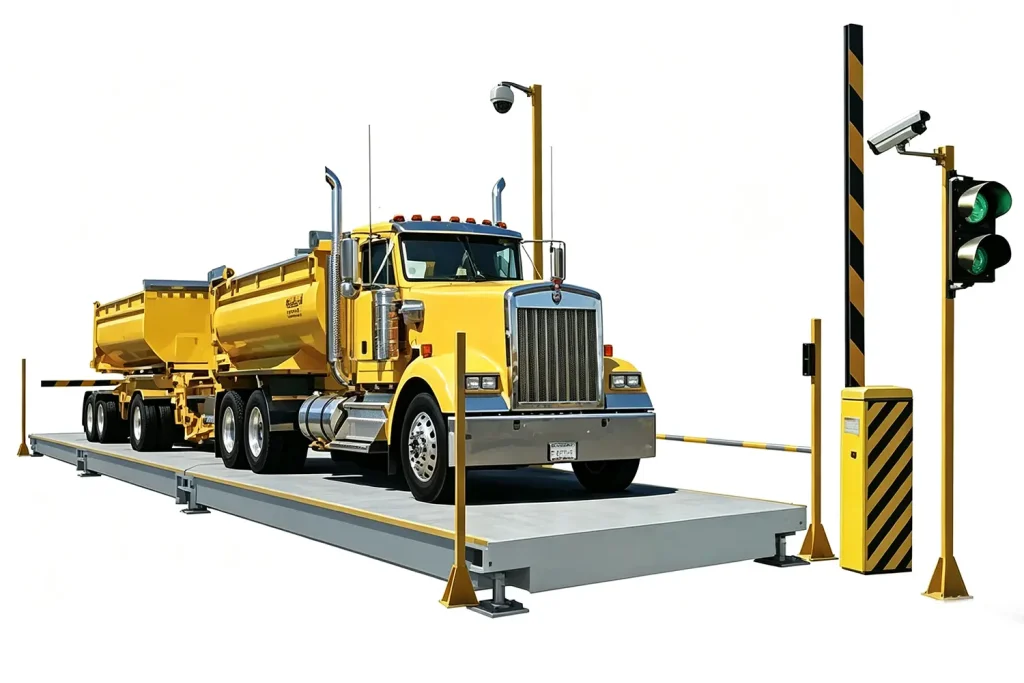
When a vehicle approaches, the traffic light shows red and the barrier gate remains closed. After the vehicle detector (or radar) and photoelectric sensor coordinate to confirm the vehicle has stopped stably and the plate has been successfully recognized, the AVS system commands the barrier gate to lift rapidly within 3 seconds while the traffic light turns green and the voice prompt announces “Please proceed.” Once weighing is complete and the vehicle departs, the barrier gate drops automatically and resets to a red light, forming a closed-loop traffic guidance cycle.
What can the voice subsystem broadcast, and what should be done if on-site personnel cannot hear or understand clearly?
The built-in voice subsystem can broadcast real-time weighing guidance prompts (such as “Please get on the scale”, “Please stop”, “Weighing in progress”), weighing result announcements (such as “License Plate: Su XXXXX, Gross Weight: XX tons”), and voice error alerts. The system supports volume adjustments to ensure clarity on-site. For special foreign drivers or noisy environments, it can also be paired with a large LED screen to display text simultaneously.
What are the civil engineering requirements for truck scale installation, and what is the construction difference between a pit-type and a surface-mounted (pitless) scale?
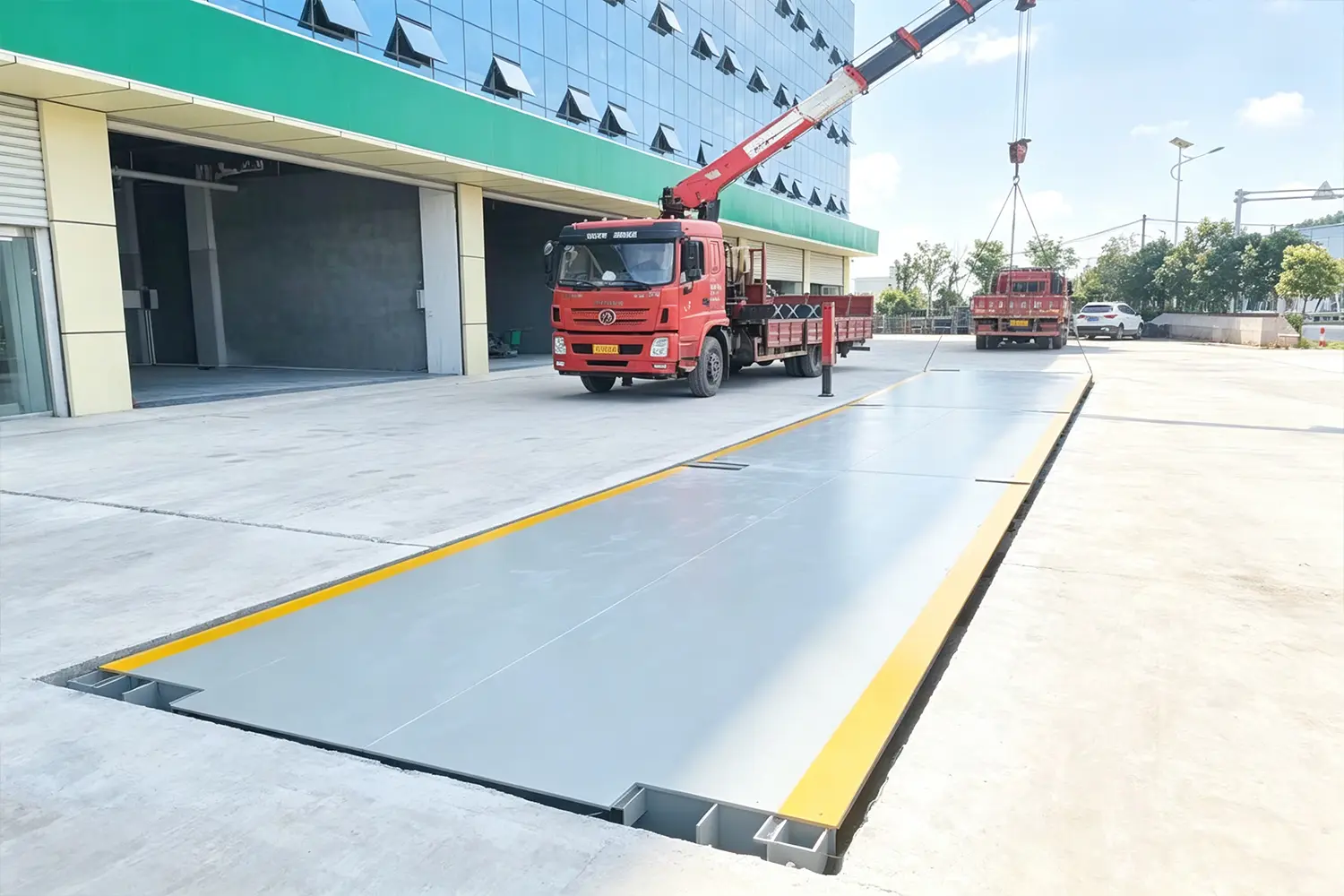
Truck scale installation requires a sturdy concrete foundation to withstand huge axle loads and total weights. Construction differences include:
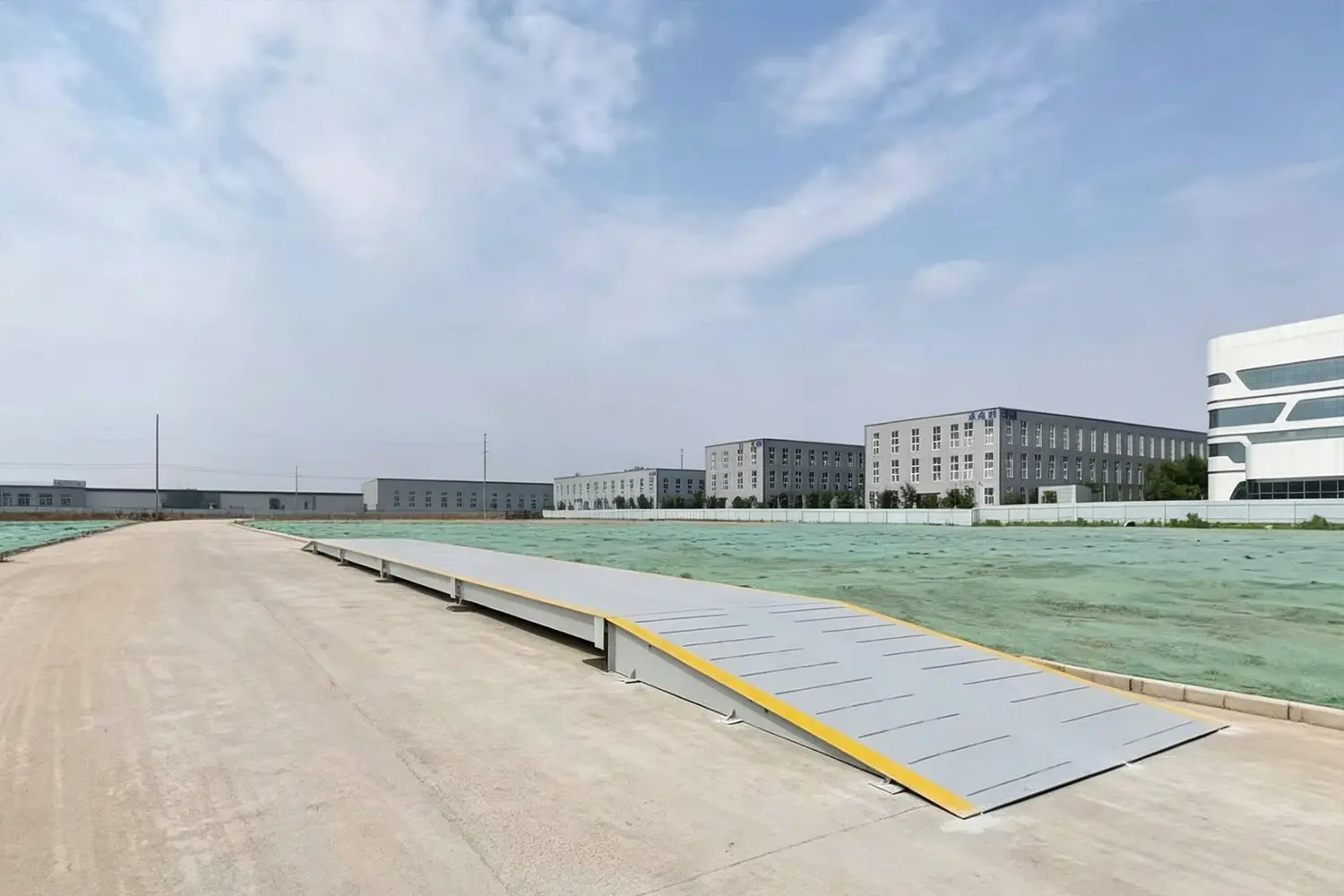
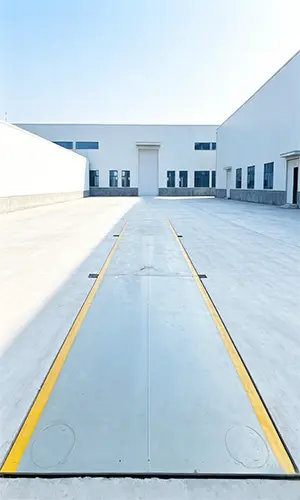
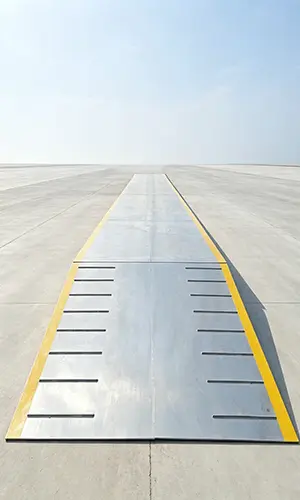
Surface-Mounted (Pitless) Weighbridges: The scale body is elevated above ground level, requiring ramps for vehicles to drive up and down. Civil engineering costs are lower, and routine maintenance, cleaning, and drainage are simpler.
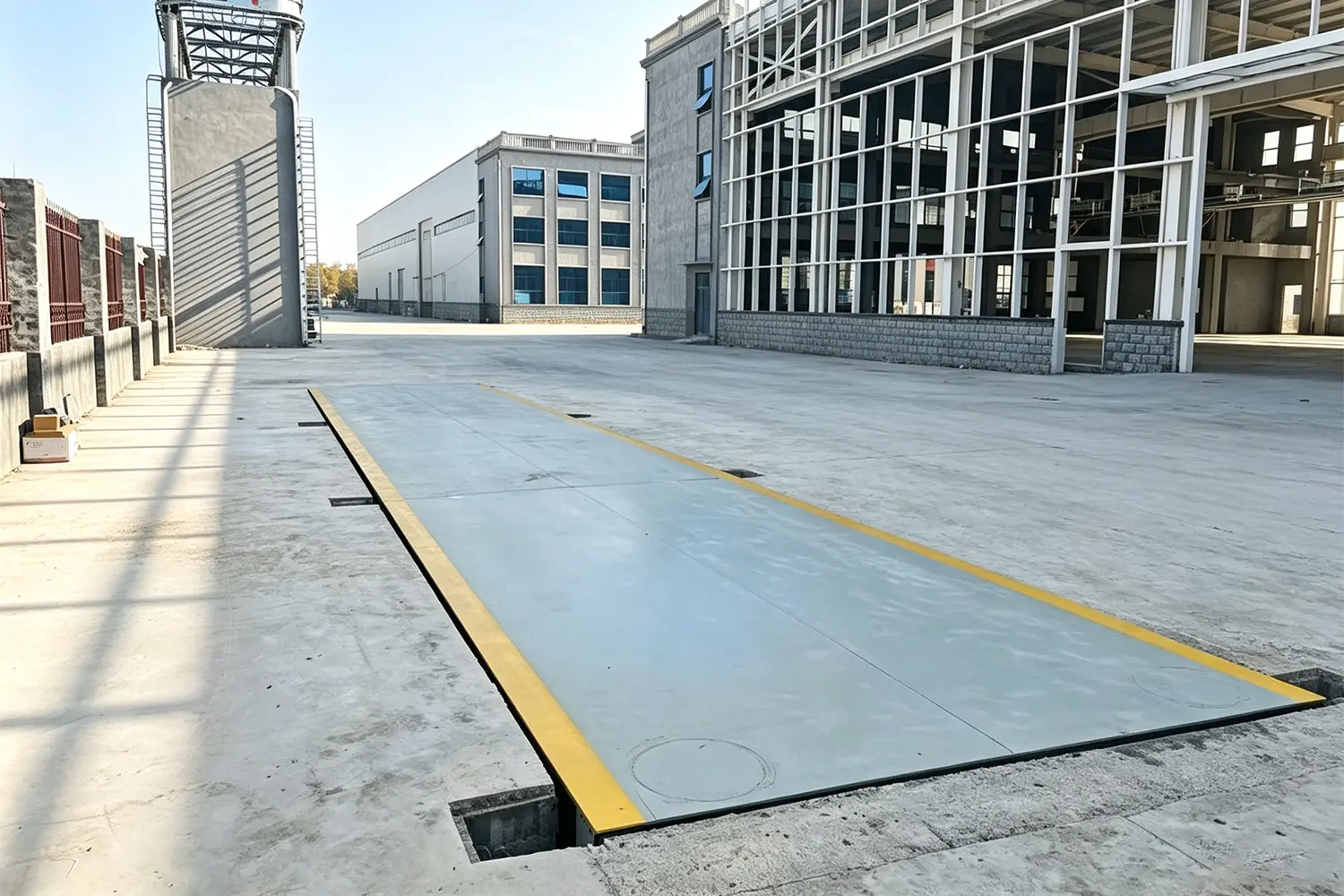
Pit-Type Weighbridges: The scale body is installed flush with the ground level, saving yard space and allowing multi-directional vehicle access, but it has stricter and heavier requirements for drainage systems and foundation pit structural design.
What specific role does the photoelectric induction detection subsystem play during the weighing process?
The photoelectric induction detection subsystem is mainly used to detect whether a vehicle has fully entered and parked within the safe area of the scale platform. If a vehicle is straddling the edge, not fully on the scale, or tailgating, the photoelectric system will immediately trigger blocks and alarms, preventing inaccurate weighing data or artificial cheating caused by improper vehicle positioning.
How does the system achieve Automatic License Plate Recognition (ALPR), and what is the recognition accuracy?
The system captures vehicle or front-end images automatically when vehicles arrive at designated weighing points using high-definition waterproof network cameras installed on-site, and uses built-in image processing and license plate recognition algorithms to accurately extract and recognize plate characters within milliseconds. In standard industrial environments—supplemented by proper lighting and standard camera angles—its recognition accuracy is extremely high, meeting the high-efficiency turnover demands of 24/7 unattended operations.
What are the common specifications for the maximum capacity of truck scales, and how should a suitable model (such as the VTS201 or VTS202 series) be chosen based on truck tonnage?
The maximum capacity of truck scales typically comes in specifications such as 40t, 50t, 60t, 80t, and 100t. Customers should select models based on their daily maximum truck load weight (taking maximum axle load and overload margins into account) and site dimensions to choose the corresponding platform length, width, and number of sections (such as surface-mounted VTS201 or pit-type VTS202 series).
What is the accuracy class of the weighing sensors, and do standard configurations feature waterproof and rust-proof functions?
The comprehensive accuracy class of the standard weighing sensors for Speyer truck scales reaches C3. Furthermore, they are standard-equipped with stainless steel sensors, featuring excellent rust-proof and waterproof performance to adapt to harsh industrial outdoor and humid environments.
What equipment is typically configured in a standard unattended weighing system (such as cameras, barrier gates, photoelectric induction, voice systems, etc.)?
A standard unattended weighing system typically equips waterproof network cameras (for image capture and plate recognition), standard 3-second barrier gates, traffic indicator lights, vehicle detectors or radars, photoelectric sensors (to prevent cheating or incomplete positioning on the scale), a voice broadcast speaker system, as well as the core weighing indicator and an IPC (PC-based industrial computer).
What is the difference between a single-way and a double-way weighing management system? How should my plant choose?
A single-way weighing management system typically allows vehicles to enter and exit from the same direction or follow a fixed one-way flow, which is suitable for plants with narrow spaces or simple traffic flows. A double-way weighing management system supports bidirectional vehicle entry and exit with more flexible intelligent scheduling, making it ideal for modern plants with high traffic volume, spacious grounds, and two-way passage requirements.
How do the AVS (Automated Unmanned Weighing Management System) and the industrial IPC (computer) work together?
The AVS automated unmanned weighing management system is installed and runs on an IPC (PC-based industrial computer). The IPC serves as the hardware control hub responsible for real-time weighing data collection, camera image reception, and controlling barrier gates and traffic light signals. Meanwhile, the AVS software intelligently processes these multi-source data, performs logical judgments, anti-cheat verifications, and automatically generates weighing tickets, achieving high-efficiency synergy between software and hardware.
How does an unattended weighbridge prevent cheating during weighing (such as remote control interference, incomplete positioning on the scale, or borrowing another vehicle)?
The system prevents cheating through multiple measures: 1. Utilizing digital sensors and anti-cheat terminals to resist remote control interference; 2. Relying on photoelectric induction detection subsystems and vehicle detectors to strictly ensure vehicles are fully positioned on the scale platform before weighing; 3. Cross-checking front-and-back images via the automated license plate recognition and capture subsystem to prevent vehicle switching; 4. Incorporating logic verification within the AVS system to automatically lock and trigger alarms for anomalies.
What is the IoT smart truck weighing system with license plate recognition, and what core hardware and subsystems does it include?
The IoT smart truck weighing system with license plate recognition is a comprehensive system based on IoT technology designed to automate and intelligentize the vehicle weighing process at factory gates. It mainly includes the photoelectric induction detection subsystem, image capture and monitoring subsystem, automatic license plate recognition subsystem, traffic light and barrier gate control system, voice subsystem, and the AVS (Automated Unmanned Weighing Management System) along with an IPC (Industrial Personal Computer).